
Why knees start to hurt
Your knee is a hinge that takes a beating. Every step, squat and stair puts load through it. Most of the time it handles that just fine. Trouble starts when the load is more than the knee is ready for, or when the muscles around it are not pulling their weight.
In younger, active people, knee pain often shows up around or under the kneecap, or in the tendons, after running, jumping or a sudden jump in training. In older adults, arthritis is a common reason, with stiffness in the morning and aching after a busy day. A twist can strain a ligament or irritate the meniscus, the rubbery cushion inside the joint.
- Pain around or under the kneecap, often called runner's knee
- Tendon pain above or below the kneecap from running or jumping
- Osteoarthritis and stiff, achy knees
- Sprains and twisting injuries
- Meniscus irritation from a twist or from wear over time
- Weak hips and thighs that leave the knee doing too much
How Thrive may help your knees
Here is something that surprises a lot of people. The knee is often the victim, not the villain. A stiff ankle or a weak hip can change how you land, step and squat, and the knee takes the hit. So your physical therapy plan looks above and below the sore spot.
Most knee plans lean on strength. Stronger thigh and hip muscles help share the load, so the joint itself takes less of it. You also work on moving the knee through the range it comfortably allows, plus balance and control on stairs, curbs and uneven ground. Our rehab gym area has resistance bands, balance training, parallel bars and a recumbent bike, which is often a friendly way to get a stiff knee moving without pounding on it.
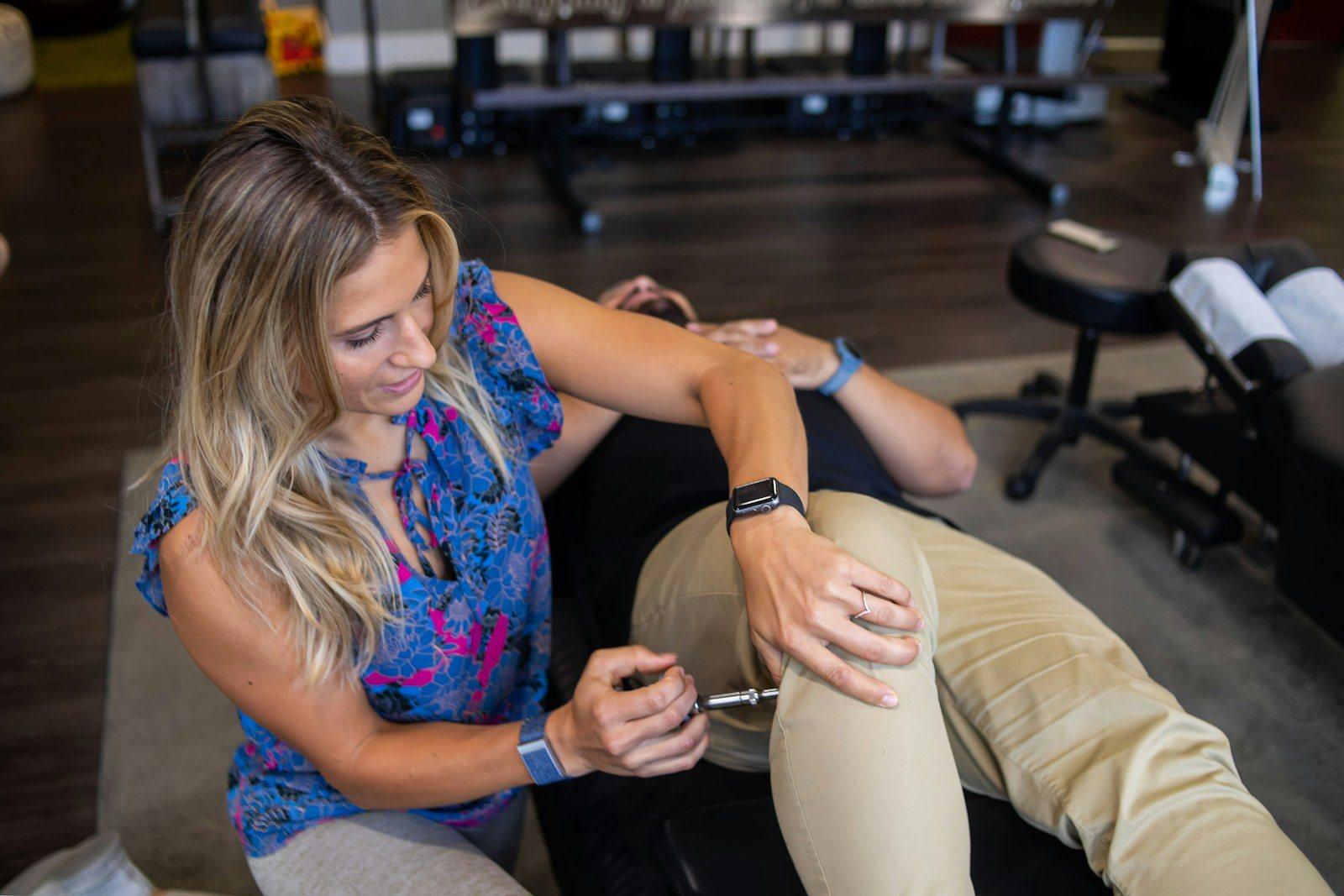
Hands on care can help around the edges. A stretching session may loosen tight hamstrings, calves and hips. Muscle scraping can target tight tissue along the thigh and calf. For stubborn tendon pain that has nagged you for months, shockwave therapy may be an option. Your provider will tell you if any of these are right for you.
- Strength work for the thighs and hips that protect your knee
- Gentle motion to ease stiffness
- Balance and control for stairs, curbs and getting up from chairs
- Low impact options like the recumbent bike
- A step by step plan to get back to walking, running or kneeling
What your first visit looks like
Your first visit is a physical therapy evaluation. Your therapist asks how the pain started, where exactly it hurts, and what it keeps you from doing. Stairs? Squatting? A long walk? Kneeling on the prayer rug?
Then they watch you walk, squat, step down from a small box and balance on one leg. They check how far the knee bends and straightens and how strong the muscles around it are. You leave with a clear plan and a few simple exercises you can start at home.
When to see a doctor first
Some knee problems need a doctor before they need a therapist. Please get checked right away if any of these apply to you.
- You heard a pop and the knee swelled up fast or feels like it gives way
- You cannot put weight on the leg
- The knee locks and will not straighten
- The joint is hot, red and very swollen, or you have a fever
- Your calf is swollen, warm or painful, especially after surgery or a long trip
- The knee looks out of place or you suspect a fracture
Insurance, investment and booking
We accept all major insurance plans, and we verify your benefits for you before your first visit. Physical therapy through insurance usually needs a prescription or referral from your doctor, which your doctor can fax to (313) 921-6009. Learn more on our insurance page.
Self pay physical therapy evaluation and treatment is a $70 investment. Shockwave therapy is a $50 investment per session. Stretching, massage and scraping are self pay unless a provider and your insurer confirm otherwise.
Ready to take the stairs without bracing yourself? Tap the Book button, or call or text (313) 429-9079. If stairs are hard for you right now, call before your visit and we will help you plan the easiest way to our 2nd floor suite.