
Scoliosis in plain words
Your spine is supposed to look fairly straight from behind. With scoliosis, it curves to the side, often in an S or C shape, and the spine can also twist a bit.
Many curves are mild and never cause much trouble. Some people notice uneven shoulders or hips, clothes that hang a little differently, or one side of the back that sticks out when they bend forward. Adults often come in because of muscle aches, stiffness or fatigue from standing, sitting or working at a desk all day.
Scoliosis often shows up in kids and teens during growth spurts. It can also appear later in life as the spine changes with age.
What physical therapy can and cannot do
Let's be straight with you. Physical therapy does not straighten the spine. Anyone who promises that is selling something.
What physical therapy may do is help with the things you feel every day. Pain. Posture. Strength. How easily you move. Many people find that when the muscles around the curve get stronger and more balanced, daily life gets easier. Carrying groceries. Standing at the stove. Sleeping through the night.
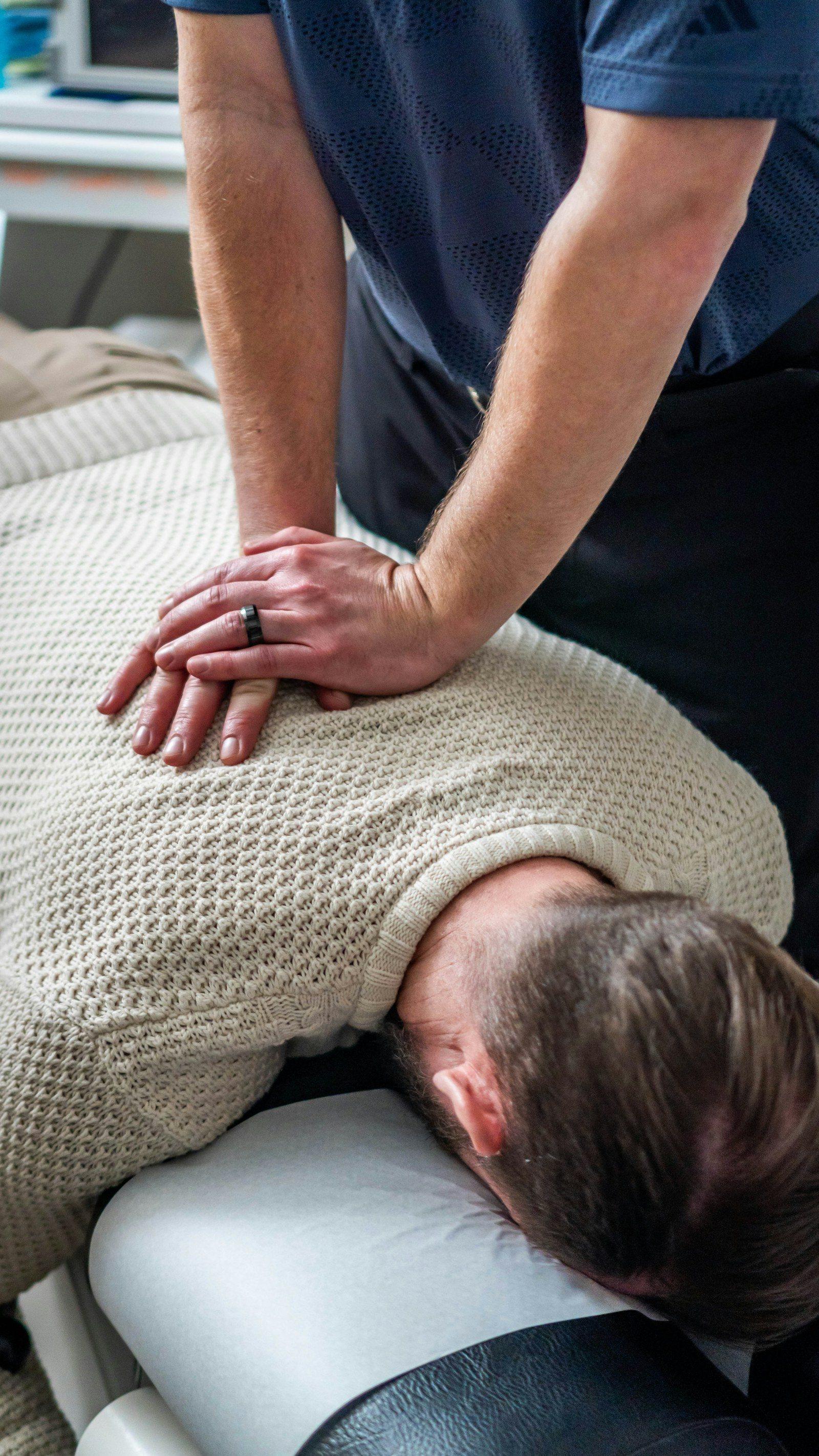
Your plan might include breathing and posture work, core and back strengthening, balance training, and exercises matched to your specific curve. Gentle hands on care like deep tissue massage or a stretching session may help tight muscles on the overworked side. Your provider will tell you what is right for you.
- Exercises chosen for your curve, not a generic handout
- Strength work for your core, back and hips
- Posture and breathing practice you can use at work and home
- Hands on care for sore, tight muscles when it fits your plan
A note for parents of kids and teens
If your child or teen has scoliosis, their doctor should be following the curve over time. Growing spines can change, and decisions about monitoring, bracing or other treatment belong with that doctor.
Physical therapy can work alongside that care, not in place of it. If your child is being seen here, we will want to know what their doctor has said, and we encourage you to keep every follow up appointment.
Your first visit
Your first visit is a physical therapy evaluation. Your therapist asks when the scoliosis was found, what your doctor has told you, and what bothers you most. Bring any X-ray reports you have, or ask your doctor to fax them to (313) 921-6009.
Then your therapist looks at how you stand, bend, breathe and balance, and checks strength on both sides. You leave with a clear plan and a short list of exercises to start at home.
When to see a doctor first
Please see a doctor before starting therapy if you notice a curve that seems to be changing quickly, back pain with fever, numbness or weakness that is spreading, loss of bladder or bowel control, severe pain that has no clear reason, or new pain after a major fall or accident.
Insurance and booking
We accept all major insurance plans and we verify your benefits for you before your first visit. Physical therapy through insurance usually needs a doctor's prescription or referral. See our insurance page for the details.
Self pay? A physical therapy evaluation and treatment visit is a $70 investment. Tap the Book button to choose a time, or call or text (313) 429-9079.