
Why shoulders start to hurt
Your shoulder moves more than any other joint in your body. That freedom comes with a catch. It depends on a small group of muscles called the rotator cuff, plus the muscles around your shoulder blade, to keep everything centered and moving smoothly.
When those muscles get tired, weak or irritated, trouble follows. Lifting, throwing, painting a ceiling or years of desk work with rounded shoulders can all play a part. Some people develop a frozen shoulder, where the joint slowly stiffens and loses motion over months. Others hurt it in one moment, like a fall onto an outstretched arm.
- Rotator cuff irritation and tendon pain
- Pain when you lift your arm out to the side or overhead
- Frozen shoulder and stiffness that builds over months
- Strains from lifting, throwing or overhead work
- Arthritis in the shoulder joint
- Rounded shoulders and a stiff upper back from long hours of sitting
How Thrive may help your shoulder
Shoulder pain often gets rest and a bottle of pills. That can calm things down for a while. But if the muscles that steady the shoulder stay weak, the pain tends to come back the next time you reach for something heavy.
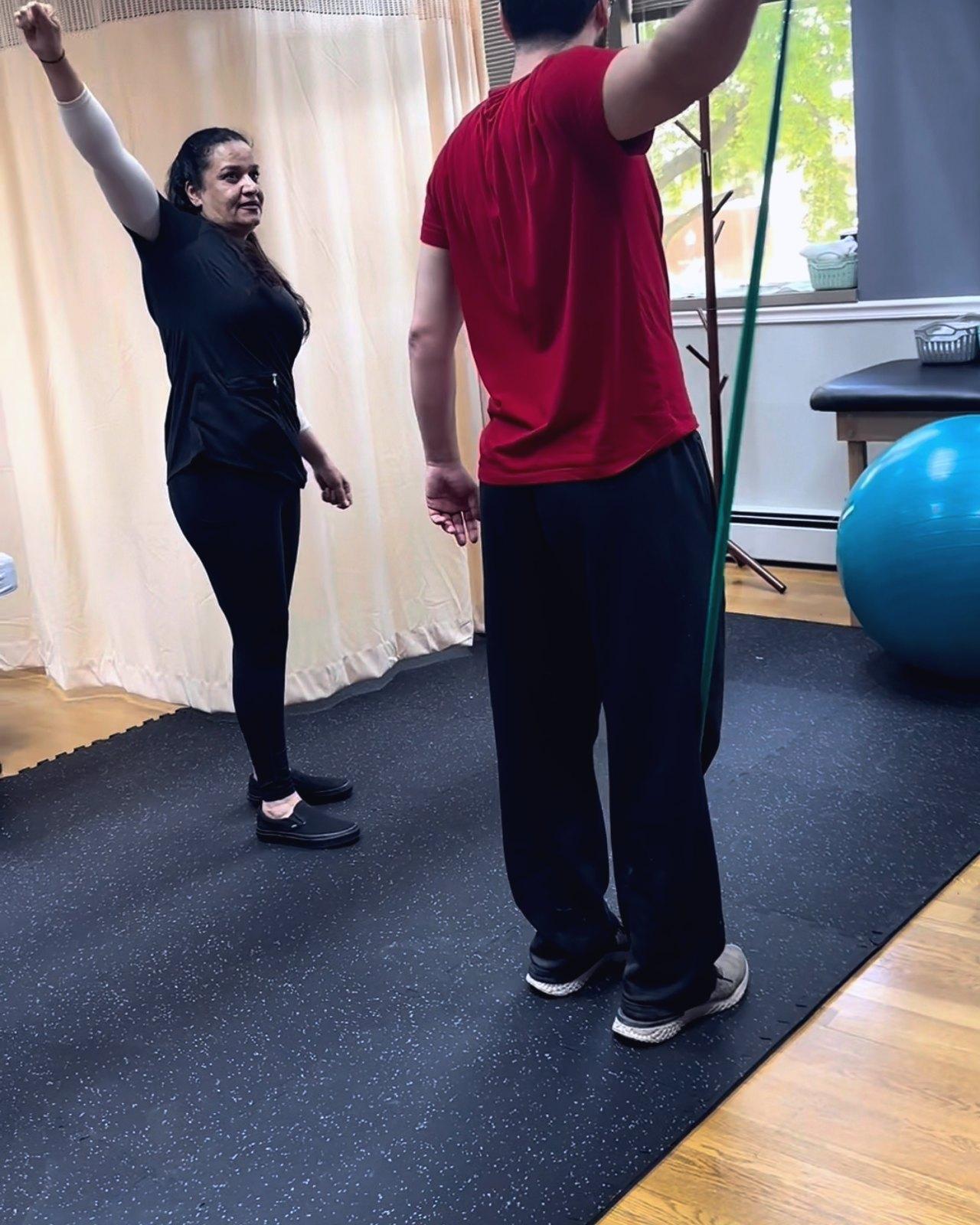
Physical therapy goes after that. Your therapist looks at how your shoulder blade, upper back and neck move along with your arm. Your plan may include gentle motion to get the arm moving again, strength work for the rotator cuff and shoulder blade muscles with resistance bands, and changes to how you lift, reach and sleep.
Hands on care can help too. Muscle scraping and cupping are favorites for a tight upper back and shoulders. Deep tissue massage may help muscles that have been guarding a sore joint. For stubborn tendon pain that has hung on for months, shockwave therapy may be an option. Your provider will tell you if any of these are right for you.
- Gentle motion to help you lift and reach again
- Strength work for the rotator cuff and shoulder blade muscles
- Upper back and posture work so the shoulder has a solid base
- Tips for sleeping, lifting and reaching with less pain
- Hands on care for tight, guarded muscles
What your first visit looks like
Your first visit is a physical therapy evaluation. Your therapist asks how it started, which movements hurt, and whether it wakes you up at night. Then they check how far your arm lifts on its own and with a little help, test the muscles around the shoulder, and look at your neck, since neck problems can send pain into the shoulder.
You talk through what they found in plain words. Most people start treatment that same visit and go home with a few simple moves. If the shoulder is very stiff, expect the plan to move at a pace your body can handle.
When to see a doctor first
Shoulder pain is usually a muscle, tendon or joint problem. But sometimes pain in the shoulder is a warning sign from somewhere else. Get medical care right away if any of these apply to you.
- Shoulder or arm pain with chest pressure, shortness of breath, sweating or nausea (call 911)
- You cannot lift your arm at all after a fall or injury
- The shoulder looks out of place or you suspect a fracture
- The joint is hot, red and swollen, or you have a fever
- Numbness or weakness in the arm that is spreading
- Severe pain with no clear reason that does not ease with rest
Insurance, investment and booking
We accept all major insurance plans, and we verify your benefits for you before your first visit. Physical therapy through insurance usually needs a prescription or referral from your doctor. Your doctor can fax it, along with any imaging reports, to (313) 921-6009. Our insurance page explains more.
Self pay physical therapy evaluation and treatment is a $70 investment. Shockwave therapy and muscle scraping are each a $50 investment per session. Massage, cupping and scraping are self pay unless a provider and your insurer confirm otherwise.
Ready to reach the top shelf again? Tap the Book button, or call or text (313) 429-9079.