
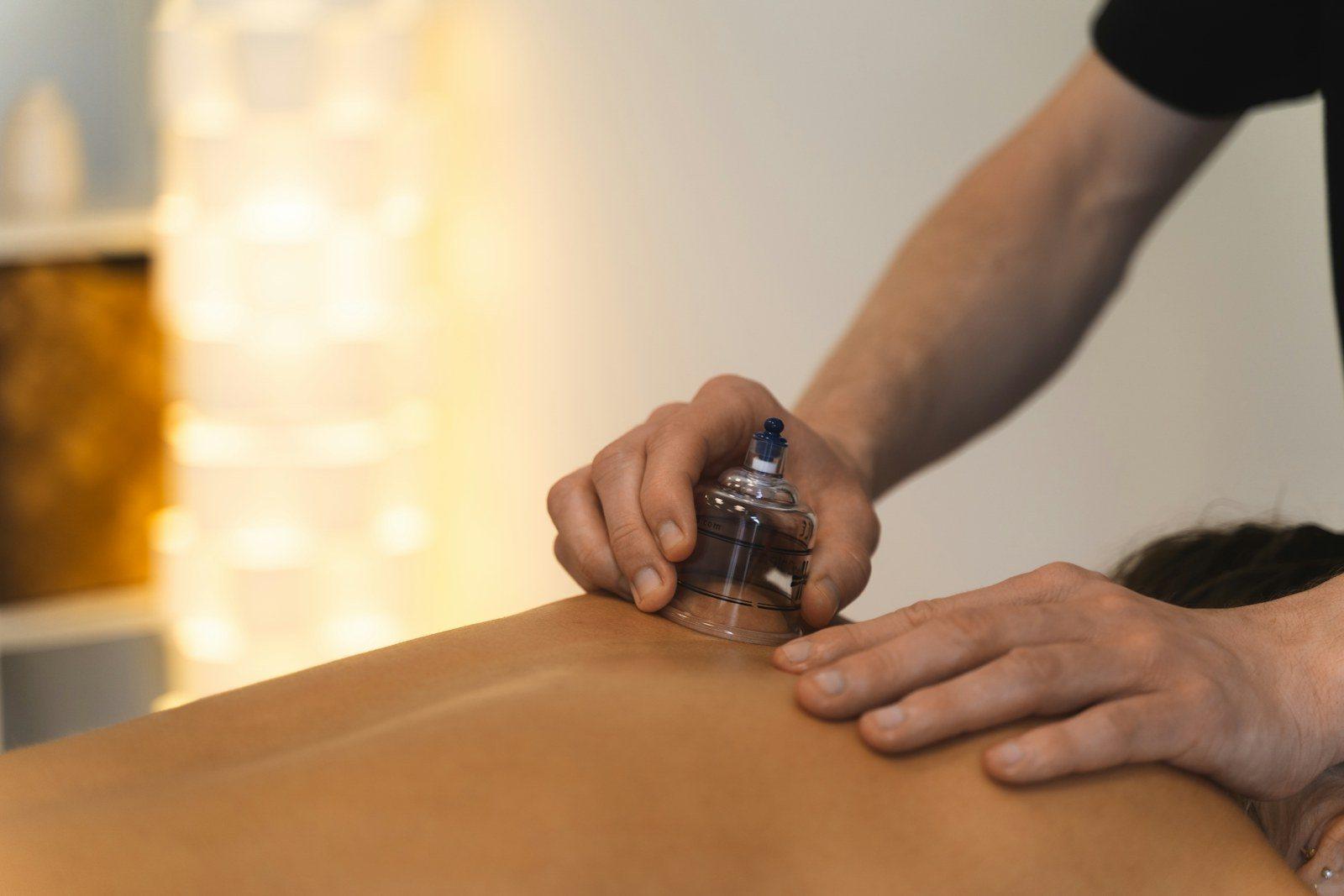
What dry cupping is
Dry cupping is simple. Your therapist places cups on your skin and creates suction. The suction gently pulls the skin and the tissue underneath up into the cup. Sometimes the cups stay still. Sometimes your therapist slides them along the muscle.
It is called "dry" because there are no small cuts involved. That is the difference between dry cupping and wet cupping, also known as Hijama. For a bigger look at both styles, visit our cupping therapy page.
Cupping is one of the things our patients mention most in their Google reviews. People come in curious and leave asking when they can book again.
Who it may help
Dry cupping is popular with athletes, but you don't need a jersey to benefit. It may help people like:
- Lifters and gym regulars with tight backs, shoulders, and hamstrings after heavy training days.
- Office workers whose upper back feels like one big knot by Friday.
- Drivers, delivery workers, and anyone who sits in one position for hours.
- People who find deep pressure massage too intense and want another way to loosen up.
- Anyone who just wants to feel lighter and move more easily through the day.
What your visit is like
Before anything else, your therapist asks where you feel tight, what you do for work and exercise, and about your health history. Tell them if you take blood thinners, have a skin condition, bruise easily, or are pregnant. That helps them decide whether cupping is a good fit.
Then you rest on a padded treatment table. Your therapist places the cups on the target area and adjusts the suction. Most people describe it as a strong pulling or tugging feeling. It should not be painful. If it feels like too much, say so and your therapist will ease the suction.
About those marks. Cupping often leaves round marks on the skin. They are not the same as a bruise from a bump, and they usually fade over several days. If you have a wedding, a pool party, or a photo shoot coming up, plan your visit with that in mind.
When cupping is not the right first step
If your tightness is tied to an old sports injury, our page on sports injuries explains how Thrive may help with a broader plan. If your pain is sharp, getting worse, or started after a fall or accident, book a physical therapy evaluation first.
Investment and how to book
The self pay investment for dry cupping is $50. Cupping is self pay unless your provider and insurer confirm otherwise.
Ready to try it? Tap the Book button to choose a time on our online calendar, or call or text (313) 429-9079. We are at 835 Mason St, Suite A-245, on the 2nd floor in Dearborn. Female clients can request a female therapist when booking.